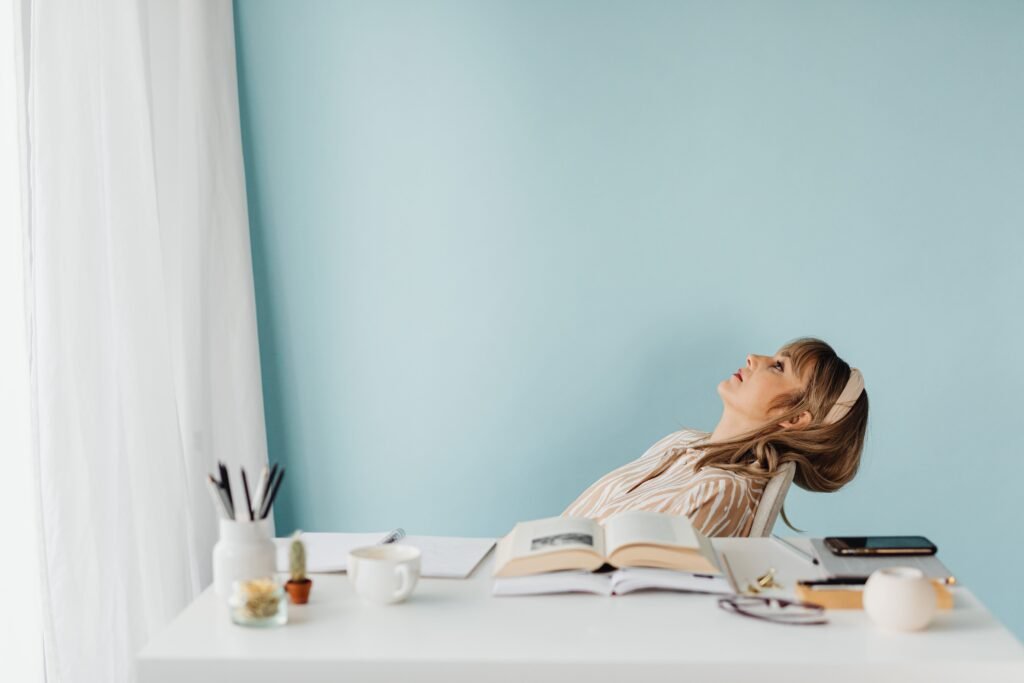
Stress Is Making Your Symptoms Worse: Here's How to Calm Your Nervous System
When stress becomes chronic, your body may struggle to rest, recover and heal.
Feeling Tired, Wired and Wondering What's Wrong With You?
Perhaps you’ve noticed that you’re more tired than usual.
Your sleep isn’t great.
Your patience is wearing thin.
You’re feeling anxious, overwhelmed or constantly on edge.
You might be experiencing headaches, digestive issues, cravings, brain fog or stubborn weight gain.
And despite your best efforts, you don’t seem to feel any better.
If this sounds familiar, stress may be playing a bigger role than you realise.
Many women assume stress is simply an emotional issue.
But stress affects the entire body. It can influence almost every health goal you’re trying to achieve.
The good news?
Your nervous system can learn to feel safe, calm and balanced again.
What Is Your Nervous System?
Your nervous system acts as your body’s control centre.
It’s constantly scanning your environment and asking one important question:
“Am I safe?”
When the answer is yes, your body can focus on:
Digestion
Recovery
Sleep
Hormone balance
Immune function
Energy production
When the answer is no, your body shifts into survival mode.
This is commonly known as fight or flight or the freeze response.
The problem is that modern stress often keeps us stuck there for longer than nature intended.
Why Modern Life Keeps Us Stressed
Modern stress often comes from the accumulation of many small pressures rather than one major event.
Thousands of years ago, stress was usually short-term.
You escaped the danger and your body returned to normal.
Today, stress looks very different.
Your nervous system may react to:
Work deadlines
Financial concerns
Caring responsibilities
Poor sleep
Relationship difficulties
Information overload
Constant notifications
Trying to do too much
The body doesn’t always distinguish between a genuine threat and everyday pressures.
It simply responds.
And if these pressures never stop, neither does the stress response.
Signs Your Nervous System Might Be Overloaded
Many women don’t realise stress is affecting them until symptoms become difficult to ignore.
Common signs include:
Physical Symptoms
Fatigue
Headaches
Muscle tension
Digestive discomfort
Frequent illness
Poor sleep
Emotional Symptoms
Anxiety
Irritability
Feeling overwhelmed
Low motivation
Difficulty switching off
Behavioural Symptoms
Emotional eating
Sugar cravings
Procrastination
Overworking
Constant busyness
If you’re experiencing these, you’re not alone.
These are common signs that your body may need more support and recovery.
Stress Can Affect More Than Your Mood
One of the biggest misconceptions about stress is that it only affects how we feel emotionally.
In reality, chronic stress can influence:
Sleep
A stressed nervous system struggles to relax.
Weight Management
Stress can increase cravings and encourage comfort eating.
Energy
Being constantly “on” is exhausting.
Digestion
Stress can affect digestion and gut function.
Hormones
Chronic stress can disrupt many hormonal processes.
Healthy Habits
When we’re overwhelmed, self-care often becomes harder.
This is why managing stress isn’t a luxury.
It’s an essential part of supporting your overall health.
How to Calm Your Nervous System
The good news is that your nervous system is adaptable.
Small, consistent practices can help your body move out of survival mode and into recovery mode more often.
Let’s start with 5 simple tips.
1. Breathe Slower Than You Think You Need To
Slowing your breath communicates safety to your nervous system.
When we’re stressed, breathing often becomes shallow and rapid.
Your breath is one of the quickest ways to communicate safety to your nervous system.
Try This
Breathe in slowly through your nose for four counts.
Breathe out slowly for six counts.
Repeat for one minute.
Longer exhalations help encourage relaxation.
2. Get Outside Every Day
Nature is calming for the nervous system.
Nature can be remarkably calming for the nervous system.
Even a short walk outdoors can help:
Lower stress
Improve mood
Increase energy
Support sleep
You don’t need a countryside retreat.
A local park or a walk around the block can still be beneficial.
3. Create Small Moments of Recovery
Listening to music is a small moment of recovery from stress.
Many people spend their entire day “doing.”
Very few spend time recovering.
Recovery doesn’t have to be complicated.
It might be:
A cup of tea in silence
Reading for ten minutes
Stretching
Listening to music
Sitting in the garden
The goal is not productivity.
The goal is restoration.
4. Reduce Stimulation Before Bed
A simple evening routine can reduce stress and improve sleep.
A stressed nervous system often struggles to switch off.
Endless scrolling, work emails and television right before sleep can make this harder.
Try Creating a Simple Wind-Down Routine
Dim the lights
Put screens away
Read a book
Listen to calming music
Small changes can improve both sleep and stress resilience.
5. Stop Treating Rest as Something You Earn
This may be the most important point of all.
Many people believe they must complete everything on their to-do list before they deserve to rest.
The problem?
The list never ends.
Rest isn’t a reward for productivity.
It’s a biological need.
Just like food, water and sleep.
Giving yourself permission to rest may be one of the healthiest things you do.
A Five-Minute Nervous System Reset
The next time you’re feeling overwhelmed, try this:
✓ Take five slow breaths
✓ Relax your shoulders
✓ Put both feet on the floor
✓ Step outside for a few minutes
✓ Ask yourself: “What do I need right now?”
Five minutes won’t remove every stressor.
But it can help your body feel safer and calmer.
Final Thoughts
If you’ve been feeling exhausted, anxious, overwhelmed or stuck, stress may be contributing more than you realise.
The good news is that your nervous system is not fixed.
It can learn new patterns.
It can become more resilient.
And it can begin to feel calmer with consistent support.
You don’t need to meditate for an hour every day.
You don’t need a perfect morning routine.
You simply need small moments of recovery woven into your everyday life.
As a health coach, I help women create practical, sustainable habits that support stress reduction, better sleep, improved energy and long-term wellbeing. Together, we focus on realistic changes that fit into real life rather than adding more pressure.
Elinore x
Ready to Feel Calmer, More Energised and More in Control?
Book a free health review call and let’s explore how small changes can help you support your nervous system and improve your overall wellbeing.
Because feeling better shouldn’t feel like another thing on your to-do list.